
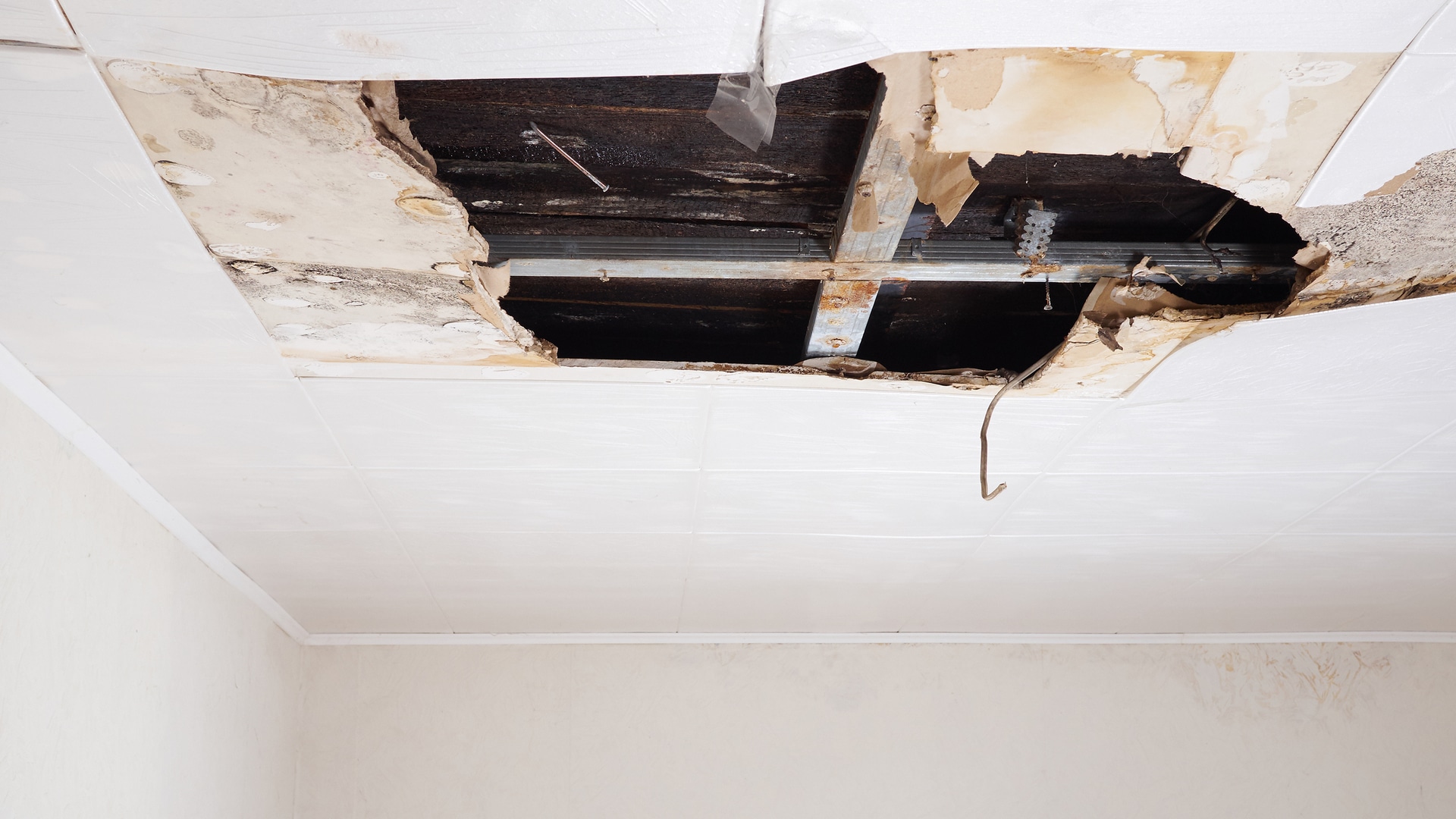
Ceiling collapse accidents produce 6 distinct injury types: traumatic brain injuries, spinal cord damage, lacerations, fractures, soft tissue injuries, and psychological trauma. And each requires specific evidence to build a successful premises liability claim in New York. A tenant who is the victim of a leaking, cracked, water-stained, moldy, chipped, sagging, or otherwise defective ceiling that later collapses may have a strong lawsuit against the landlord or management company that maintained the property.
This article identifies every major ceiling collapse accident type, the injuries each produces, and the 8 categories of evidence that strengthen your personal injury claim.
What Causes a Ceiling to Collapse – 7 Documented Causes
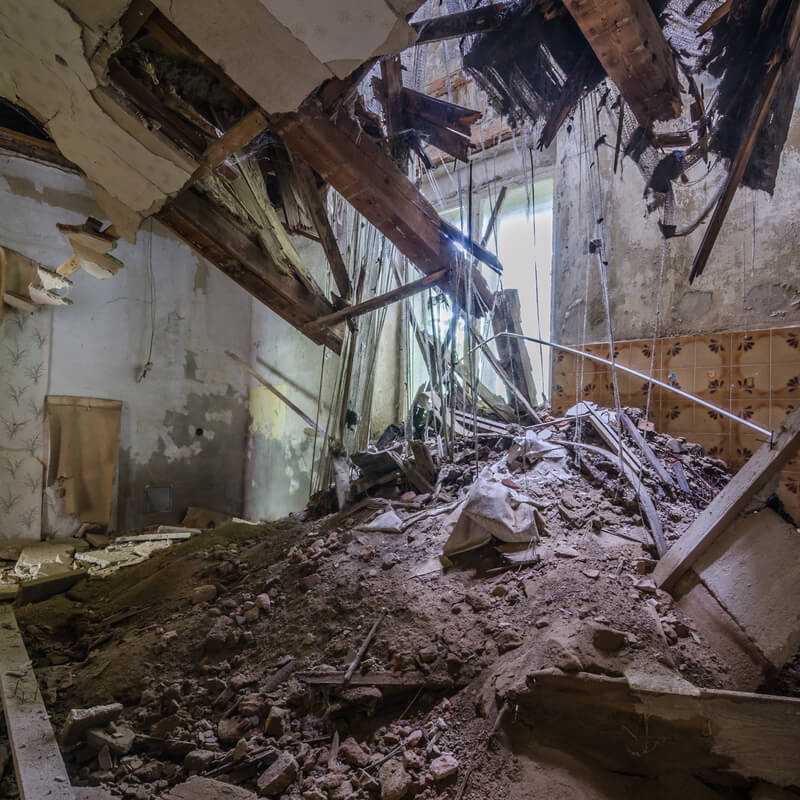
Properly installed ceilings do not simply collapse without warning – when a ceiling falls, it is because the ceiling itself or the roof above it has fundamental issues that have been repeatedly overlooked.
There are 7 documented causes of ceiling collapse accidents in New York, each creating a distinct legal basis for premises liability.
Plumbing leaks and water damage are the leading causes of residential ceiling collapses in New York City. Water from broken pipes, overflowing fixtures, or roof leaks saturates drywall, plaster, and structural joists over weeks or months, progressively weakening load-bearing capacity until the ceiling fails entirely. Plumbing issues in units above you can potentially weaken your ceiling – this can happen in any apartment, regardless of what you pay in rent.
Deferred maintenance and landlord negligence rank as the second most common cause. Negligent property owners who ignore leaking roofs or forgo necessary ceiling repairs to save money place innocent lives in jeopardy – and property owners regularly paint over damaged or leaky ceilings to conceal the dangers that lie beneath.
Structural deterioration in aging buildings is a systemic cause unique to New York City, where thousands of residential buildings are over 100 years old. NYC is home to many 100-year-old buildings, and while ample precautions exist to fortify aging architecture, negligent plumbing and maintenance are responsible for most New York City ceiling collapses that cause serious injury.
Construction defects and substandard materials cause ceiling failures in both new construction and renovated buildings. Substandard building materials used to increase profit margins create structural vulnerabilities that only become apparent when the ceiling fails under ordinary load conditions.
Faulty installation of plumbing and ductwork inside walls and ceilings creates a distinct collapse risk. Pipes and air ducts are often installed in walls and ceilings – if installed improperly, the weight of the pipes or ducts may cause collapse, and water damage caused by a leak may result in an unexpected structural failure.
Pest infestation causes hidden structural damage that property owners are legally required to remediate. Infestation by insects and vermin that weaken structures – including termites, carpenter ants, and rodents – compromises ceiling joists, beams, and drywall fasteners over time, increasing collapse risk in buildings where infestations go unreported or untreated.
Violation of New York City building codes is the seventh cause, covering improper renovation work, unpermitted ceiling modifications, and failure to comply with the New York City Administrative Code requirements for structural inspections and repairs.
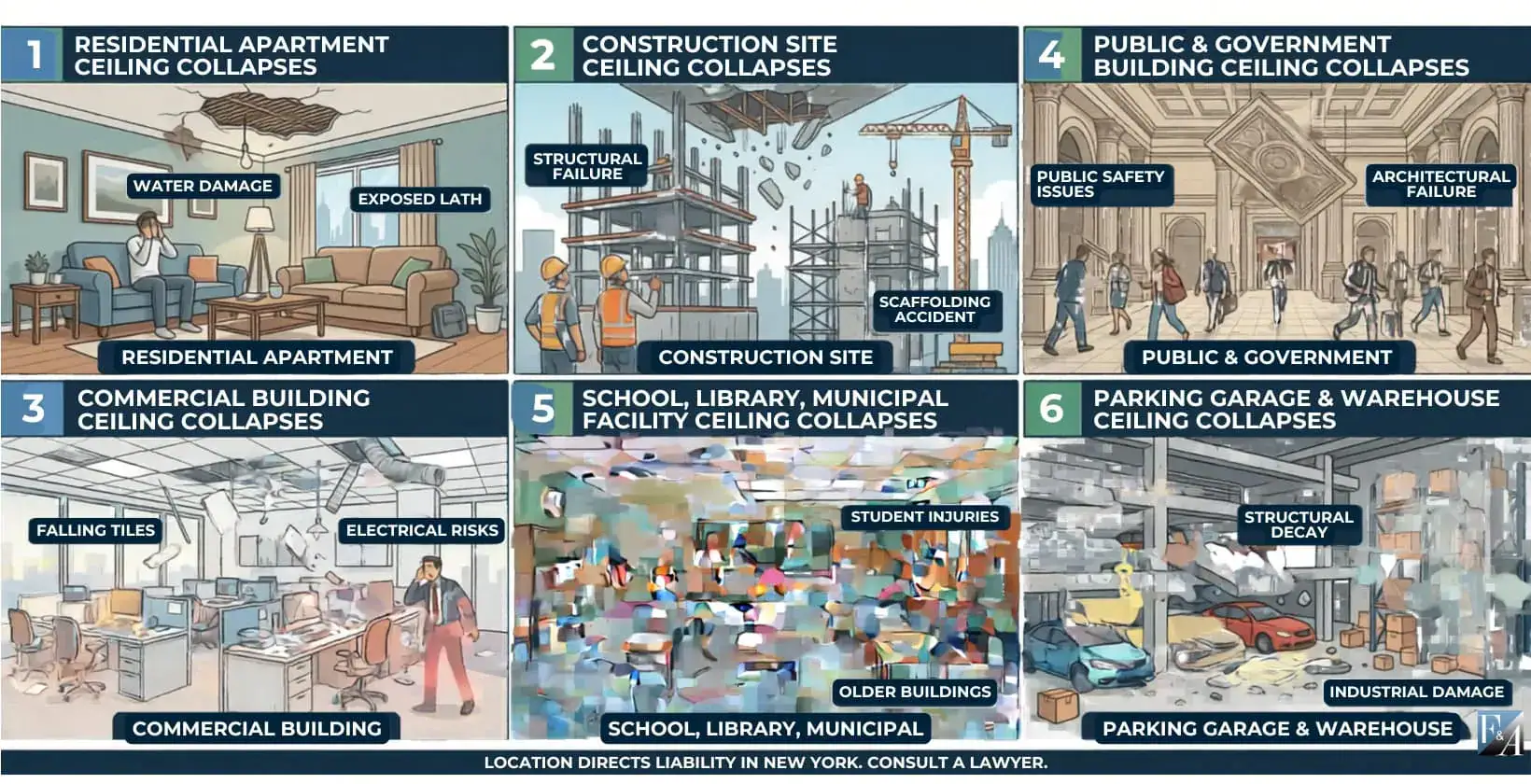
6 Types of Ceiling Collapse Accidents by Location
Ceiling collapse accidents occur across 6 distinct location types in New York, and the location directly determines which parties bear liability and which legal theories apply to your claim.
Residential apartment ceiling collapses are the most common type in New York City. A ceiling collapse has the potential to not only leave you injured but also without a home and wondering what steps to take next. In these cases, liability falls on the landlord, property management company, or both, depending on their respective maintenance obligations under the lease and New York housing law.
Construction site ceiling collapses fall under New York Labor Law § 240(1) and § 241(6), which impose strict liability on property owners and general contractors. Construction workers often work on buildings that are only partially completed – these environments contain such hazards as half-built walls, poorly secured ceilings, faulty plumbing within walls, shoddy construction, and unsafe architectural plans, all of which can contribute to the collapse of a ceiling, wall, or roof.
Commercial building ceiling collapses – occurring in offices, restaurants, retail stores, and hotels – establish liability against the commercial property owner or tenant responsible for building maintenance. Ceiling or building structure collapses can occur in commercial buildings including offices, restaurants, retail stores, or hotels where poor maintenance or substandard construction are common causes.
Public and government building ceiling collapses involve a distinct legal requirement. A ceiling collapse could happen in housing operated and managed by the New York City Housing Authority – and if you have a lawsuit against the New York City Housing Authority, a Notice of Claim must be filed within 90 days from when the accident occurred. Missing this 90-day deadline permanently bars your claim against the city.
School, library, and municipal facility ceiling collapses fall under the same Notice of Claim requirement and involve institutional defendants – including the New York City Department of Education and municipal building departments – who carry their own liability insurance and legal defense resources.
Parking garage and warehouse ceiling collapses produce some of the highest-severity injuries because the structural materials involved – concrete, steel, and heavy-gauge plaster – cause catastrophic crushing injuries when they fail. Heavy loads, vibrations, or weather damage can weaken structural integrity in parking garages and warehouses.
8 Categories of Evidence to Give Your NYC Ceiling Collapse Lawyer
Collecting the right evidence within 48 hours of a ceiling collapse dramatically increases the settlement value and legal strength of a premises liability claim. There are 8 categories of evidence that ceiling collapse lawyers use to establish landlord negligence, prove causation, and document the full extent of damages.
Photographs and video of the collapse site represent the most critical immediate evidence. Take pictures of the ceiling immediately after the collapse to show the damage – the ambulance and sometimes the FDNY Fire Department respond to ceiling collapse calls. Document the collapsed area, the debris field, visible water staining, mold, exposed structural elements, and any pre-existing cracks or deterioration visible from the collapse.
Written repair requests to the landlord or property manager are the single most powerful evidence of negligence. A truly powerful piece of evidence is a prior written request you made to the landlord to fix the plumbing issue – if your landlord ignored your written requests for repair, your case is very strong. Preserve every text message, email, certified letter, and written maintenance request with delivery confirmation.
Building violation records obtained through FOIL requests provide documented proof that the property had prior code violations. One important investigative tool attorneys use shortly after being retained is a Freedom of Information Law (FOIL) search – one great resource is the New York City Department of Housing Preservation search, which shows prior complaints made by tenants including the type of complaint, the Administrative Code or Building Code violation, and the location where the violation was found.
Medical records from the date of injury forward establish the causal link between the ceiling collapse and your injuries. Seek emergency medical treatment immediately even without visible injuries – obtain and keep copies of all medical records related to your injuries, including diagnosis, treatment, and follow-up visits. Gaps in medical treatment give defense attorneys grounds to argue the injuries are unrelated to the collapse.
Witness statements from neighbors, coworkers, and bystanders corroborate your account of the collapse and the pre-existing conditions that caused it. Statements from bystanders, coworkers, or neighbors can support your case by confirming what happened – collect full names, contact information, and written accounts within 24 hours before memories fade or witnesses become unavailable.
Physical debris samples from the collapsed ceiling allow structural engineers and forensic experts to identify construction defects, identify substandard materials, and establish the precise mechanical cause of failure. If possible, retain samples of debris or materials involved in the collapse – this evidence can help identify the cause and support your claim.
Property maintenance and inspection records reveal whether the landlord conducted legally required inspections and whether known defects were documented but left unrepaired. Maintenance records showing evidence of ignored maintenance requests or delayed repairs, along with inspection reports showing whether the building was regularly inspected, form key evidence in ceiling collapse claims.
Incident reports filed with the property owner, FDNY, or building management create an official contemporaneous record of the event. File a formal report with the property owner, landlord, or property manager and request a copy – document the date and time of the report and any responses received. In cases involving New York City Housing Authority properties, this report also begins the 90-day clock for filing the required Notice of Claim.
Free Download
Ceiling Collapse Evidence Checklist
Evidence collected in the first 48 hours after a ceiling collapse determines the strength of your premises liability claim. This free checklist covers all 8 categories of evidence your lawyer needs — including a daily injury log you can fill in immediately.
8 evidence categories
Daily injury log included
NYCHA 90-day deadline guide
100% free — no sign-up required
⬇ Download Free Checklist (PDF)
Have questions about your case? Call (866) 288-9529 for a free consultation — no fees unless we win.
Contact a New York Ceiling Collapse Lawyer – Free Case Review
A ceiling collapse changes your life in an instant. The evidence collected in the 48 hours following the accident determines the difference between an inadequate early settlement and full lifetime compensation for your injuries, lost income, and pain. At 866 Atty Law, our New York ceiling collapse lawyers have secured multi-million dollar verdicts and settlements for premises liability victims across all 5 boroughs. Call (866) 288-9529 now for a free case evaluation – no fees unless we win.