

Brooklyn Brain Injury Lawyer
Brooklyn brain injury trial lawyers since 1999. In one case, the insurer offered $140,000 and we recovered $3.1 million. We prove the injuries MRI and CT scans miss. No fee unless we win.




Based on 300+ reviews
Why Hire Our Brooklyn Traumatic Brain Injury Lawyer?

Nearly $1 Billion Won
We’ve recovered almost $1 billion for injured clients across documented cases

Largest MVA Recovery
We recovered $69.25M, the largest single motor vehicle accident settlement

Media Recognition
We’ve been featured in national and local outlets including the New York Post, Daily Mail, and CBS New York

No Fee Unless We Win
You look the same. Your scans may come back normal. But you can’t concentrate, sleep, or work the way you did before. If someone else’s negligence caused your brain injury in Brooklyn, NY, the Brooklyn brain injury lawyers at Frekhtman & Associates can help you recover compensation for medical care, lost income, and the life you’ve lost. Call (718) 331-7700 today for a free consultation.
At Frekhtman & Associates, we believe you. Brain injuries from pedestrian knockdowns, falling construction debris, and high-speed crashes often don’t show up on an MRI or CT scan, and symptoms can take days or weeks to appear. Insurers use those gaps to deny claims. We close them with neuropsychological testing, treating physician testimony, and life care plans that show a jury what the scans can’t.
It works. In one brain injury case, the insurance carrier opened at $140,000 and the final settlement reached $3.1 million. We’ve also won $1.8 million jury verdicts in head trauma cases. Founder Arkady Frekhtman has tried injury cases to verdict since 1999, and our firm has recovered more than $900 million for injured New Yorkers. See our verdicts and settlements and client reviews.
Visit us at 60 Bay 26th St., or request a free consultation online. We speak English, Spanish, and Russian, and we’ll come to your home or hospital room if you can’t travel. You pay nothing unless we win.
Posted on Google
 Aryan Dogra
Trustindex verifies that the original source of the review is Google.
Very good arkady normally does verdict searches for his clients and helps educate them . He does this for free without any expectation of anything .Posted on Google Matthew SumnerFrekhtman & Associates delivered beyond expectations. From start to finish, the process was smooth, professional, and stress-free. A special shoutout to Lead Negotiator Ray Robinson his communication, dedication, and ability to get results truly stood out. If you want a team that fights for you and keeps you informed every step, this is the firm to trust. Highly recommend!+0Posted on Google
 Artur Ryndyugathey got me paid 9k. theyre amazing for personal injury. they do not mess around.Posted on Google
 Jesse CastilloFrekhtman & Associates was the right choice for me. The team there were professional, responsive, and supportive. I always felt like my case mattered. Ray Robinson stood out for his clear, detailed communication and steady guidance. He kept me updated throughout and made sure I never felt lost in the process. I’m very thankful for the support from the entire team and would absolutely recommend them!!Posted on Google
 Michael DaughertyI have a case in Michigan. Mr. Frektman gave me a free consultation, and listened to the issues that I had with my attorney at the time. He sent me the verdict search, which showed that my lawyer is a chronic settler lol. No trials since.2011 for the firm, my attorney specifically had zero trials. So.he sent me a list of attorneys in MI that he knows, or has worked with in the past. I reached out to 2 of the attorneys and 1 did not respond, the other declined to take my case. Mr. Frektman and Nickesha, his assistant(I assume), actually reached out to me after the one attorney declined my case. They both said they would be willing to help with a referral to some different attorneys. I received a call from one of the best trial attorneys in MI and they are taking my case. I have fired my previous attorney and signed the agreement with the new attorney. Arkady Frektman and Nickesha had no interest in my situation, but took their time and energy and did everything possible to get me a different attorney. The people's attorney! I genuinely believe they do this job, to help people. Not just make money. But when you're as good as this, the money just naturally comes when you help so many! Thank you Arkady Frektman and Nickesha! So grateful and appreciate all that you do!Posted on Google
 Adam BI was researching new lawyers for my slip and fall case when I found Arkady Frekhtman. He is located in NYC, but I'm not, but they still offered to help me find a better lawfirm to help in my slip and fall case. My old lawfirm which I won't name here, were pretty much horrible. Hopefully my new lawyers that Arkady Frekhtman referred me to will be able help me the best way possible since they are highly rated and are amazing! I'm so happy to have new lawyers to help me for my accident. I hope Arkady Frekhtman and his team have a wonderful 2026, God blessed everyone over there! Especially Nickesha from Frekthman and Associates! She and Arkady were awesome!Posted on Google
 AndreYour in good hands look no where else, If you been injured. This team is knowledgeable and really care about assisting you. Tune in yourself to watch of their live videos on YouTube! Where you get to ask live questions. Accident happened out of state? They will find you the best legal representation with the resources they have.Posted on Google
 JESUS FLORENCIOMy daughter fractured her ankle inside a Chinese toy store, and no one helped us call an ambulance. I had to take her to the hospital in a taxi. Do I have access to a lawsuit or not?
(Translated by Google, see original)Posted on Google BRUSTOWN ALMANDO⭐️⭐️⭐️⭐️⭐️ Outstanding Results with Frekhtman & Associates! I had the privilege of working with Ray Robinson, a Senior Negotiator at Frekhtman & Associates, and I can confidently say — he’s one of the best in the business. From day one, Ray was professional, sharp, and fully committed to getting me the compensation I deserved. He took the time to explain every step of the process and always kept me informed. What impressed me most was his dedication and skill in negotiating — he helped me secure the absolute best settlement for my case. Ray Robinson doesn’t just do a job — he delivers results. If you’re ever in an accident and need someone who will fight for you like family, he’s the one you want in your corner. Thank you, Ray, and thank you to the entire team at Frekhtman & Associates. Highly recommended!Posted on Google
 Norma LindoAbsolute Attention to details. Professionally sensitive to my individual present emotion; dealing with the aftermath event which abruptly interrupted the normal course of my life. Tremendous compassion with each conversation regarding my care and immediate needs as it relates with my now active daily living and my physical changes, my alternatives, internal difficulities and new way of life. It is my ability to cope and desires to strive with each passing day. Looking back at the very strong woman, full of adventures and life before the horrendous and catastrophic unevitable outcome. Frekman & Associates are a truly humane group of professionals. The unleash of true justice from their powerful representation to the victims they serve, is ever mindful "How valuable and important people's lives are when each are given an opportunity to let justice prevails, even to the bitter end."!



Prior results do not guarantee a similar outcome.
Common Types of Brain Injuries in Brooklyn Accidents
A traumatic brain injury occurs when an external force disrupts normal brain function, causing swelling, bleeding, or lasting damage. Doctors classify TBI by severity. Mild cases involve loss of consciousness for less than 30 minutes, moderate cases up to 24 hours, and severe cases beyond 24 hours with frequent long-term cognitive effects. A concussion is a mild TBI, but “mild” refers only to the medical category, not the impact on your life.
Understanding which type of injury you sustained matters legally. The classification directly determines the value of your claim, the experts required to prove it, and the lifetime costs your case must account for.
Concussion (Mild TBI)
A concussion occurs when the brain moves rapidly inside the skull, producing loss of consciousness lasting for less than 30 minutes or no loss of consciousness at all. Symptoms, including headaches, memory loss, and cognitive fog, can persist for months or years as Post-Concussion Syndrome.
Moderate TBI
Loss of consciousness lasting 30 minutes to 24 hours, with post-traumatic amnesia up to 7 days, and abnormal imaging. Injuries at this level may qualify as catastrophic under New York law.
Severe TBI
Loss of consciousness exceeding 24 hours, survivors may permanently lose the ability to speak, move, or regulate emotions, and in the most tragic cases, result in wrongful death.
Contusion
A localized brain bruise caused by direct impact, producing bleeding or swelling at the injury site that frequently requires emergency surgical intervention.
Coup-Contrecoup Injury
The brain slams back and forth inside the skull from a single event, creating damage at both the point of impact and the opposite side simultaneously.
Diffuse Axonal Injury (DAI)
High-speed rotational forces stretch and tear nerve fibers throughout the brain, invisible on standard CT and MRI but detectable with DTI, making legal proof dependent on advanced diagnostics.
Penetrating Injury
An object punctures the skull and enters brain tissue, common in Brooklyn construction site accidents, and typically results in permanent, irreversible damage.
Anoxic and Hypoxic Brain Injury
Oxygen deprivation from near drowning, cardiac arrest, or a complicated birth is legally actionable when caused by another party’s negligence.
Second Impact Syndrome
A second TBI sustained before the first has fully healed, a common occurrence among construction workers, dramatically worsens outcomes and strengthens a lifetime damages claim.
CTE (Chronic Traumatic Encephalopathy)
Repeated brain trauma accumulated over time, associated with progressive dementia and Parkinson’s-type symptoms, and increasingly recognized in civil litigation.
There is no prosthetic for the brain. Dead neurons cannot be restored by any surgery, medication, or device currently available, and that is what makes TBI categorically different from every other personal injury.
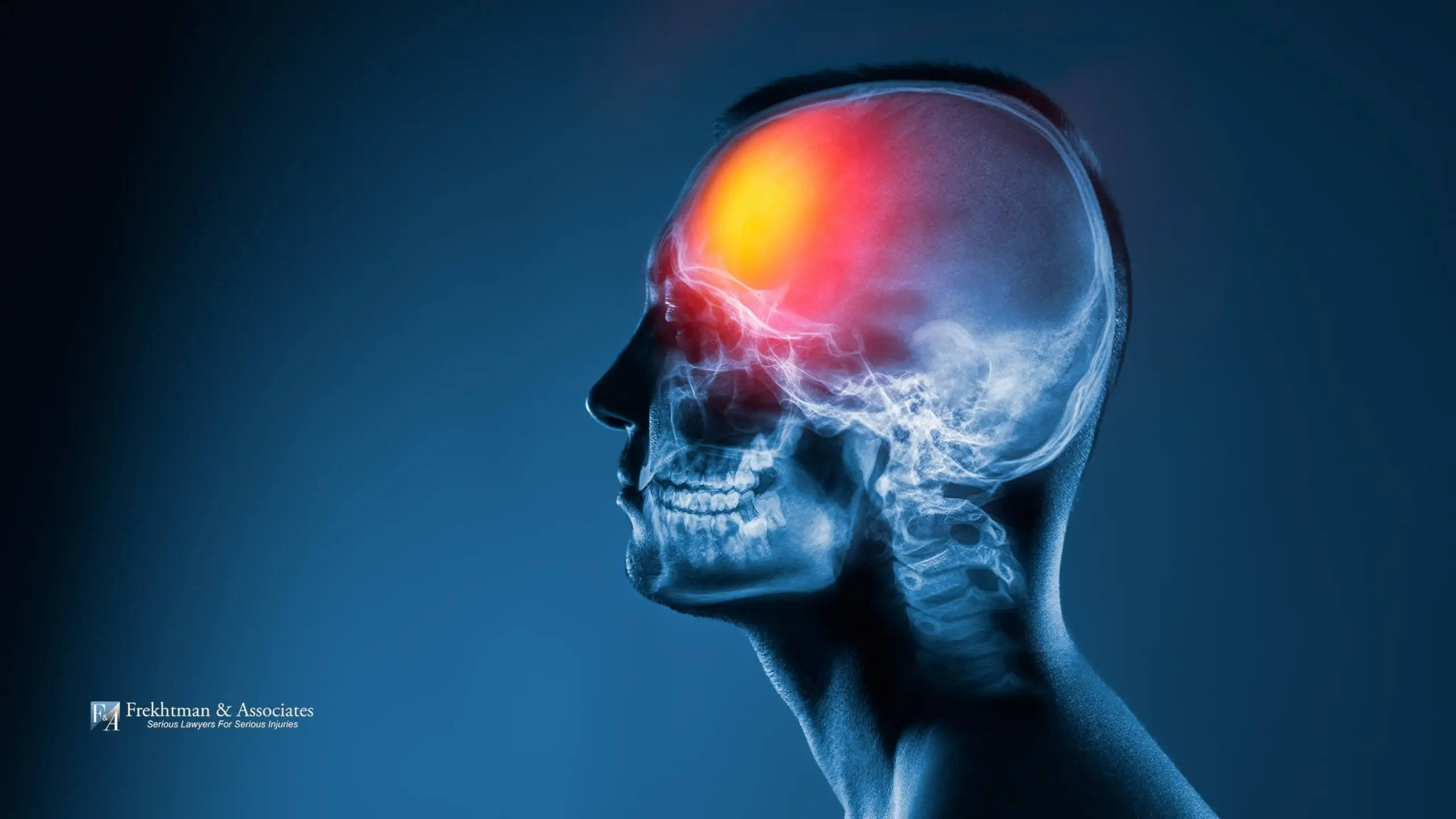
Symptoms of TBI: Physical, Cognitive & Behavioral
The most frustrating part of a brain injury is that you can appear completely healthy while your mind struggles with the simplest tasks. Symptoms do not always surface right away. They can emerge hours, days, or even weeks after the accident. That delay is precisely why insurance companies challenge so many TBI claims in Brooklyn and across New York.
Physical Symptoms
- Persistent headaches that resist medication
- Dizziness and vertigo affect balance
- Sensitivity to light and sound
- Overwhelming fatigue after routine activities
- Sleep disturbances
- Blurred vision and ringing in the ears
- Persistent nausea
- Seizures, slurred speech, or fluid draining from the nose or ears in severe cases
Go to the ER the same day, even if you feel fine. Begin a daily symptom journal immediately. Every gap in your medical record is an opportunity for an insurer to argue your injuries were not caused by the accident.
Cognitive Symptoms
- Forgetting conversations or repeatedly asking the same questions
- Searching for words and leaving sentences unfinished
- Rereading the same paragraph over and over because nothing registers
- Noticeably slower thinking and processing
- Mental exhaustion after even brief concentration
- Poor judgment or getting lost in places you know well
Gather employment performance reviews and academic transcripts from before the injury. When imaging appears normal, these records become your strongest objective proof of memory problems after a brain injury.
Behavioral Symptoms
- Snapping at family members over things that would never have bothered you before
- Anxiety or panic in situations that used to feel completely normal
- Unexpected crying or emotional responses that feel out of character
- A loss of interest in people, hobbies, and activities you once cared about
- Personality shifts that the people closest to you are the first to notice
- Major changes in sleep patterns, sleeping significantly more or less than before
Statements from family members and records from a therapist or psychologist capture behavioral changes that no scan can show, and no adjuster can easily explain away.
These are not character flaws or signs of weakness. They are the direct neurological result of brain damage, and every single one of them carries weight in your Brooklyn personal injury case.
Who Can Be Held Responsible for Your Brain Injury?
Identifying every liable party directly affects how much compensation you can recover. In many Brooklyn brain injury cases, multiple defendants can be pursued within a single personal injury lawsuit. Our attorneys investigate every potentially liable party from the start to build the strongest possible claim on your behalf.
- Negligent Drivers and Vehicle Manufacturers: Drivers who cause car accidents through carelessness can be held directly liable. So can commercial vehicle companies that employ negligent drivers, and vehicle manufacturers whose defective parts contributed to the crash.
- Property Owners and Building Managers: Property owners and managers are responsible for unsafe conditions on their premises, including broken stairs, wet floors, and unmarked hazards on Brooklyn properties.
- General Contractors, Property Owners, and Subcontractors: Under New York Labor Law 240, general contractors, property owners, and subcontractors can be held liable for gravity-related brain injuries on construction sites, including scaffold injuries. Equipment manufacturers face separate liability for defective machinery.
- Doctors, Hospitals, and Healthcare Providers: Healthcare providers whose negligence caused or worsened a brain injury through surgical errors, delayed diagnosis, or birth injuries are fully accountable under New York law.
- Equipment and Vehicle Manufacturers: Manufacturers can be held strictly liable when a faulty product directly caused the TBI, independent of any operator error.
New York Labor Law 240: The Brooklyn Construction Advantage
Brooklyn is one of New York State’s most active construction markets, with major development corridors running through Greenpoint, Williamsburg, and Downtown Brooklyn. New York Labor Law 240, the Scaffold Law, holds property owners and general contractors strictly liable for gravity-related TBIs on construction sites.
Four categories of construction accidents qualify under Labor Law 240. Falls from scaffolds, ladders, roofs, and elevated platforms are covered. Injuries caused by falling tools, materials, or debris at job sites qualify. The collapse of scaffolding or temporary structures qualifies as well. Inadequate or defective fall protection equipment provided by the contractor also triggers full liability.
Because comparative fault cannot be used as a defense, construction TBI victims in Brooklyn recover full compensation with no reduction for shared responsibility. If you were injured in a gravity-related accident on a Brooklyn construction site, Labor Law 240 gives you a legal advantage no standard personal injury claim can match.
Our Brooklyn personal injury attorneys investigate every potentially liable party from day one to build the strongest possible personal injury claim on your behalf.
I am so grateful to Denis for all of their amazing help and advice during a really trying period in my life.
Denis went above and beyond in his role as a case manager at Frekhtman & Associates to make sure I got the money I required to pay for missed work and medical expenses after an injury. Denis's knowledge and meticulousness were immediately apparent. They investigated my case in great detail, looking for justice wherever they could. But what really makes Denis unique is their constant sensitivity and compassion.
Posted 1 year ago on Google
What Compensation Is Available for Brain Injury Victims in Brooklyn?
A traumatic brain injury changes everything. Your ability to work, your relationships, your independence, and your financial stability are all affected. Our lawyers calculate the full value of your case before you sign anything, accounting for both immediate costs and the full lifetime impact of your injury.
Economic Damages
Economic damages cover every measurable financial loss your injury has caused, past and future.
- Medical Expenses: Emergency care, hospitalization, surgeries, diagnostic imaging, neuropsychological testing, and all follow-up treatment
- Rehabilitation Costs: Cognitive therapy, occupational therapy, and speech therapy
- Lost Wages and Reduced Earning Capacity: Income lost during recovery and permanent income loss if you cannot return to work
- Home Modifications and Caregiver Costs: Structural changes to your home and ongoing in-home nursing care
Non-Economic Damages
Non-economic damages compensate for losses that define your quality of life but never appear on a bill.
- Physical Pain and Suffering
- Mental Suffering: Depression, anxiety, PTSD, and emotional anguish
- Loss of Memory and Cognitive Function
- Loss of Enjoyment of Life
- Loss of Consortium: Impact on your spouse, children, and family relationships
New York does not cap non-economic damages in most personal injury cases, meaning you receive full compensation for pain and suffering without any artificial limit imposed by law.
Punitive Damages
Punitive damages are not standard in most TBI claims. They apply only in cases involving willful or grossly reckless conduct where punishment beyond compensatory damages is warranted.
Our Brooklyn TBI Case Results
The value of a brain injury case depends on injury severity, lifetime medical costs, lost earning capacity and available insurance coverage. Our attorneys build every case to its maximum value before any offer is considered. Here are brain injury results our firm has obtained.
| Result | Type | Case |
|---|---|---|
| $1.8 million | Verdict | Motor vehicle accident, head trauma |
| $1.8 million | Verdict | Auto accident, brain injury |
| $3.1 million | Settlement | Brain injury (the insurance carrier opened at $140,000) |
Past results do not guarantee any future outcome, and every case is different.
I cannot say enough good things about Frekhtman & Associates.
My child had traumatic brain injury. Originally I wasn't interested in a lawsuit. But it became clear that my son's brain damage was permanent. I got scared for his future. My friend recommended Frekhtman & Associates to represent me. I went from being scared, lost and confused to having a professional, empathetic, kind, brilliant team. Their communication skills and response time for call backs is amazing. I am forever grateful that I found them.
Why Insurance Companies Deny Brain Injury Claims in Brooklyn
Adjusters are trained to find gaps in your case, and a normal CT or MRI is the first gap they look for. Understanding their tactics is the first step to making sure none of them work against you. The following are the most common denial strategies used against Brooklyn TBI claimants.
- Invisible Injury Argument: Because TBI lacks visible evidence like broken bones, adjusters argue that symptoms, including headaches, dizziness, and memory loss, are exaggerated or nonexistent.
- Delayed Diagnosis Argument: When symptoms take days or weeks to appear, insurers claim the injury was caused by a subsequent event unrelated to the accident.
- Pre-Existing Condition Argument: Adjusters comb through your medical history to blame cognitive issues on prior anxiety, depression, or past injuries rather than the accident itself.
- High Cost Motivation: TBIs require long-term care and are expensive to compensate, so insurers fight large claims aggressively to protect their financial position.
- No Direct Impact Argument: Insurers deny claims where there was no direct blow to the head, despite evidence that whiplash and sudden deceleration alone are sufficient to cause brain injury.
- Medical Necessity Denials: Insurers routinely refuse to authorize cognitive rehabilitation by claiming it is not medically necessary.
Many TBI survivors face severe financial consequences, yet insurers still fight to minimize every dollar. The timeline connection between the accident and your injury weakens the longer you wait, and our attorneys act immediately to make sure that window does not close against you.
How We Prove Invisible Brain Injuries: The Three-Tool Approach
Insurance companies deny what CT scans and MRIs cannot show. Our attorneys counter with three independent diagnostic tools that produce convergent evidence. When all three reach the same conclusion, the result is an evidentiary framework no adjuster or defense expert can easily dismiss.
DTI Imaging (Diffusion Tensor Imaging)
DTI tracks water molecule movement along white matter tracts to reveal microstructural axon damage that standard imaging misses. Where a routine MRI shows nothing, DTI maps the microscopic tears in nerve fibers that define diffuse axonal injury. Our attorneys work with neuroradiologists who conduct this testing using current diagnostic technology.
Vestibular Testing (VNG)
Videonystagmography documents objective, measurable dysfunction in the vestibular system. Results are generated entirely by equipment and are not self-reported, making them impossible to fabricate or dispute.
Neuropsychological Testing
A comprehensive 6 to 8-hour evaluation measuring memory, attention, processing speed, and executive function across multiple domains. Results are compared against a pre-injury baseline established through employment records and school transcripts, providing objective before-and-after evidence of cognitive loss.
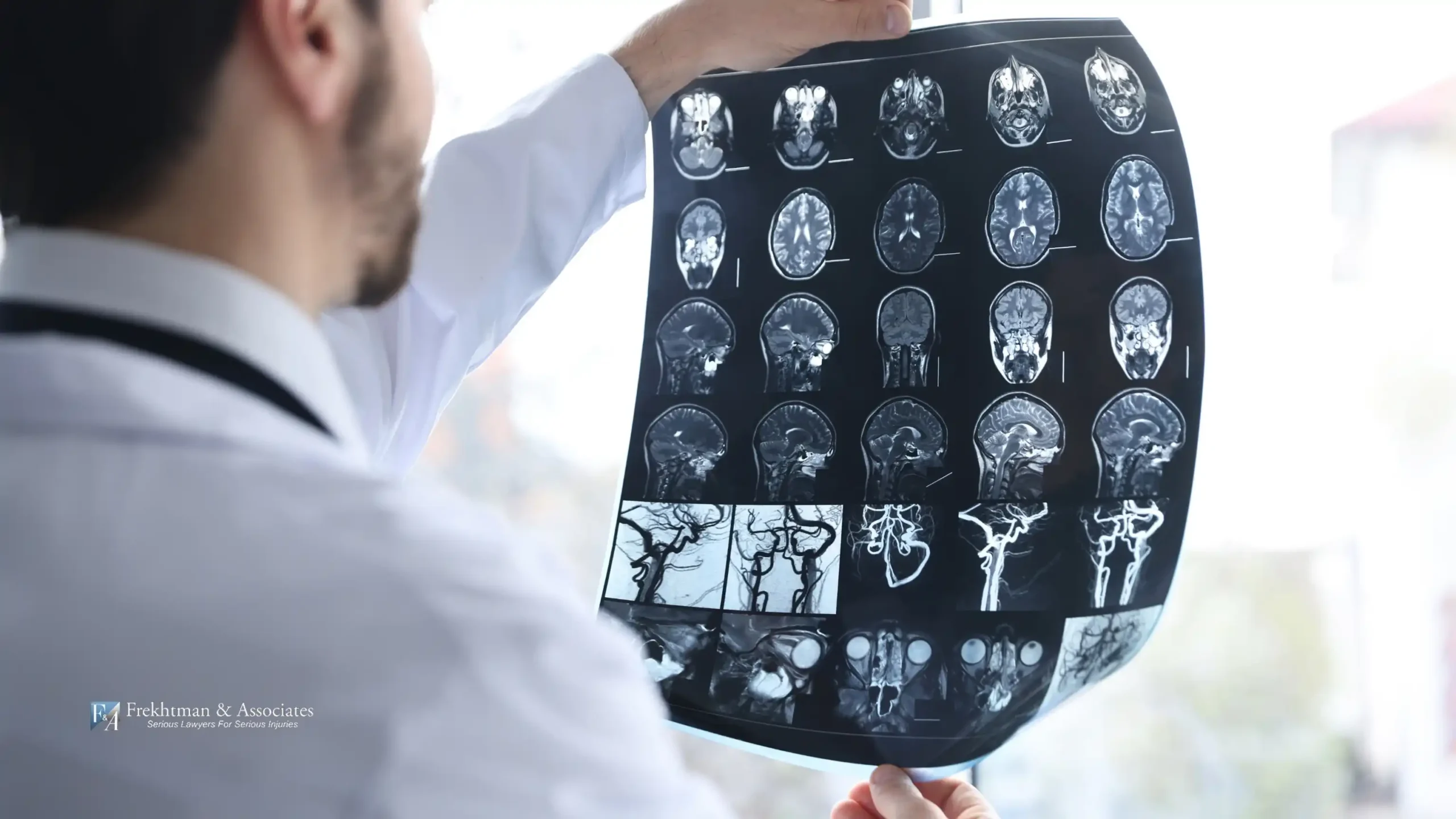
Long-Term Effects of Brain Injuries and Their Impact on Your Life
Brain injuries do not end at the accident scene. The most significant consequences often emerge weeks, months, or years later, affecting every dimension of a survivor’s life. This progression is one reason quick insurance settlements rarely account for the full scope of what a TBI survivor faces.
- Cognitive Decline: Memory loss, slowed processing speed, and difficulty returning to cognitively demanding work persist long after the initial injury, often mistaken for premature aging.
- Emotional and Psychiatric: Mood disorders are among the most common consequences of traumatic brain injury. Depression, anxiety, and apathy frequently develop in the months following injury, with rates significantly higher than in the general population.
- Physical Disability: Chronic headaches, persistent fatigue, increased risk of epilepsy, and elevated long-term risk of dementia and Parkinson’s disease can follow survivors for the rest of their lives.
- Sensory Issues: Persistent sensitivity to light and sound makes routine environments overwhelming, interfering with work and daily functioning.
- Sleep Disorders: TBI patients develop sleep disorders at significantly higher rates than the general population, compounding every other cognitive and emotional symptom.
- Employment and Financial: Career disruption following TBI is severe. Many survivors cannot return to cognitively demanding roles and face sustained income loss that grows more significant every year.
- Family and Independence: Families often transition into caretaker roles, creating relationship strain, loss of consortium, and loss of ability to perform routine tasks without assistance.
These long-term consequences are exactly why quick insurance settlements covering only emergency bills are never sufficient. Your case must account for the full lifetime cost of your injury before you sign anything. See how New York courts have valued these injuries in recent TBI verdicts and settlements.
What to Do Immediately After a Brooklyn Brain Injury Accident
The hours immediately after a brain injury accident are the most important window for both your health and your legal case. Taking the right steps quickly protects your ability to recover compensation for the full extent of your injuries.
-
Get Medical Care the Same Day
Visit the ER or urgent care immediately, even if you feel fine. Delayed treatment is the first argument insurers use to deny your claim.
-
Start a Daily Symptom Journal
Record headaches, confusion, mood changes, and sleep problems from day one. When imaging appears normal, this documentation becomes critical evidence in your case.
-
Gather Supporting Records
Request employment performance reviews and school transcripts from before and after the injury. These provide objective evidence of cognitive changes that no scan can capture.
-
Never Give a Recorded Statement
Adjusters call quickly while victims are still confused or in shock. Do not speak to the other party's insurer before consulting a brain injury lawyer.
-
Call Your Lawyer Immediately
Surveillance footage at Brooklyn accident sites is typically overwritten within 24 to 72 hours. Contact us the moment you are able. Evidence must be secured fast.
Why Choose Frekhtman & Associates for Your Brooklyn Brain Injury Case

Arkady Frekhtman did not start this firm because of a personal tragedy. He started it because he saw powerful insurance companies taking advantage of people who had no voice. Since 2000, our firm has recovered more than $900 million for injured New Yorkers.
Here is what that experience means for your case.
- Convergent Validity Framework: Our three-tool diagnostic approach using DTI imaging, vestibular testing, and neuropsychological evaluation proves injuries that standard imaging cannot detect.
- Medical-Legal Team: We assemble six or more experts per case, including a neurologist, neuropsychologist, life care planner, vocational expert, accident reconstructionist, and neuroradiologist.
- Brooklyn and NYC Courtroom Experience: Our attorneys know the judges, the defense firms, and the tactics specific to Kings County and New York courts.
- Trial-Ready on Every Case: Every case is prepared as if it is going to trial. Insurers know which firms settle early and which ones go to court. Our $69.25 million verdict is a matter of public record.
- Multilingual Team: We serve clients in English and Russian.
- Contingency Fee: You pay nothing unless we win. Not a single dollar upfront.
What to Expect When You Call
When you contact Frekhtman & Associates, a member of our team will speak with you directly about your situation. The initial case review is free, confidential, and carries no obligation. We will explain your options clearly and tell you honestly what we see in your case.
Absolute attention to details.
Professionally sensitive to my individual present emotion; dealing with the aftermath event which abruptly interrupted the normal course of my life. Tremendous compassion with each conversation regarding my care and immediate needs. Frekhtman & Associates are a truly humane group of professionals. The unleash of true justice from their powerful representation to the victims they serve, is ever mindful 'How valuable and important people's lives are when each are given an opportunity to let justice prevails, even to the bitter end.
Areas We Serve Across Brooklyn and New York
Frekhtman & Associates represents brain injury victims across every Brooklyn neighborhood and throughout New York. Our attorneys handle cases in every borough and understand the specific requirements of filing claims in each jurisdiction.
Brooklyn Neighborhoods We Serve:
- Williamsburg and Greenpoint
- Downtown Brooklyn and
- Brooklyn Heights
- Flatbush and Crown Heights
- Bay Ridge and Sunset Park
- Bed-Stuy and East New York
- Coney Island and Brighton Beach
We Also Serve:
- Manhattan (New York County)
- Queens
- The Bronx (Bronx County)
- Staten Island (Richmond County)
We also represent brain injury victims in Nassau County, Suffolk County, and throughout Long Island. No matter where your injury occurred across the New York metropolitan area, our attorneys are ready to help. You can also visit our New York brain injury lawyer page for resources on TBI claims across all five boroughs.
Visit Our Brooklyn Office
Frekhtman & Associates
60 Bay 26th Street
Brooklyn, NY 11214
Frequently Asked Questions About Brooklyn Brain Injury Lawsuits
Can I File a Brooklyn Brain Injury Claim If My MRI Is Normal?
Yes. A normal MRI does not mean no brain injury exists. Standard imaging misses diffuse axonal injury and microhemorrhages. Our attorneys use DTI imaging, vestibular testing, and neuropsychological evaluation to prove brain injuries that standard scans cannot detect.
How Long Do I Have To File a Brooklyn Brain Injury Lawsuit?
You have three years from the date of injury to file a Brooklyn brain injury lawsuit under New York CPLR 214. If the injured person is a minor, the statute of limitations is tolled under CPLR 208, meaning they have until their 21st birthday to file. Claims against government entities like the MTA require a Notice of Claim within 90 days. Missing either deadline permanently eliminates your right to compensation.
What If I Was Partially At Fault for My Brooklyn Brain Injury Accident?
You may still recover compensation. In most New York injury cases, your payout is reduced by your percentage of fault. If you are found 20 percent at fault, you recover 80 percent of your damages. In a motor vehicle claim filed on or after May 26, 2026, CPLR § 1411(b) bars recovery if your share of fault is greater than the fault, or combined fault, of the other parties.
Does My Brooklyn Motor Vehicle Brain Injury Meet the Serious Injury Threshold?
It depends on the severity, but most TBI cases do meet the threshold under NY Insurance Law §5102(d).To recover pain and suffering, you must show a “serious injury,” most often a “significant limitation of use of a body function or system.” In brain injury cases, this is typically proven with neuropsychological testing, imaging such as DTI scans, and evidence of real-life impact like work restrictions or job loss.
Does New York Labor Law 240 Cover Brain Injuries on Brooklyn Construction Sites?
Yes. New York Labor Law 240 covers gravity-related brain injuries on Brooklyn construction sites, including falls from heights and being struck by falling objects. Property owners and general contractors are strictly liable with no comparative fault defense available.
How Much Does It Cost To Hire a Brooklyn Brain Injury Lawyer?
Hiring a Brooklyn brain injury lawyer costs nothing upfront. Our attorneys work on a contingency fee basis, meaning you pay nothing unless we win.
How Long Does Brain Injury Recovery Take After a Brooklyn Accident?
Brain injury recovery varies by severity. Mild TBI symptoms can resolve within weeks or persist for years as Post-Concussion Syndrome. Moderate and severe brain injuries often require long-term rehabilitation. Some cognitive and emotional effects may never fully resolve, which is why your case must account for lifetime costs.
Speak With a Brooklyn Brain Injury Lawyer Today for a No Obligation Case Review
The insurance company on the other side has already opened your file and started building a case designed to pay you as little as possible. The sooner evidence is preserved, the stronger your position.
Frekhtman & Associates takes over from the moment you call. Our lawyers handle the adjusters, the evidence, the experts, and the negotiations. We serve clients in English and Russian and are available around the clock.
There is absolutely no risk to call.
- $0 Upfront Costs
- 24/7 Availability
- Free Case Review
You focus on recovery. We handle everything else.
Call (718) 331 7700 or contact us online for your free case review.
The Right Representation Near You
While it’s possible to handle a personal injury case on your own, having an experienced attorney by your side significantly increases the likelihood of a favorable outcome. We have our office located all over New York City, so you don’t have to worry about office visits. You can find and visit one of our offices near you.