

Common Mistakes After A Car Accident In New York
Car accidents in New York can be stressful events. Many people make mistakes after a crash that hurt their chances of getting fair compensation. These errors can lead to problems with insurance claims and legal cases. New York law requires drivers to report accidents that cause injury, death, or major property damage. Failing to do so can make it hard to prove who was at fault. Another common mistake is not seeing a doctor right away. This can allow injuries to worsen and give insurance companies a reason to deny claims. Saying sorry at the crash scene can also backfire, as it may be seen as admitting fault. Collecting evidence like photos and witness info is crucial but often overlooked. Talking to insurance companies without a lawyer’s advice can harm a case too. Quick settlements may not cover long-term costs. New York uses comparative negligence, which means compensation can be
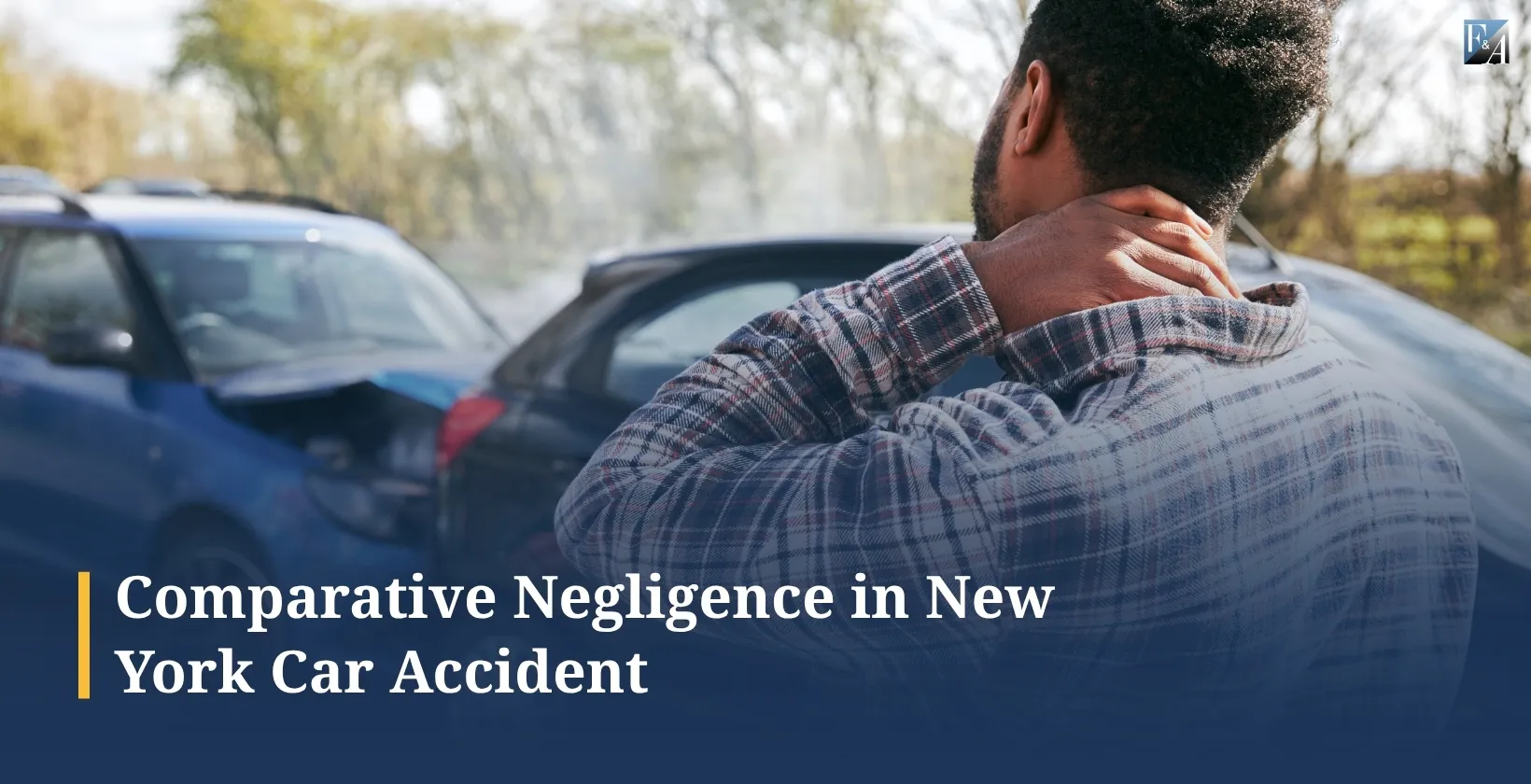
What is Comparative Negligence in New York Car Accident Claims?
Comparative negligence is the rule that decides how much a New York car accident claim is worth when more than one driver did something wrong. A jury assigns each party a percentage of the blame, and that percentage is then applied to the award. Under this rule, someone found 25% responsible for a crash collects 75% of their damages. A second rule now sits on top of that arithmetic. For car accident lawsuits filed on or after May 26, 2026, an injured person whose share of fault is greater than the combined fault of the parties they are suing recovers nothing at all. In an ordinary two-car crash, that line falls just past 50%: a driver found 51% at fault walks away with zero, while a driver found exactly 50% at fault still collects half. This new limit, or the modified comparative negligence (CPLR Section 1411(b)), applies only to motor-vehicle

What to Do After a Car Accident in New York City
Most drivers in New York City have no idea that a crash puts them up against legal deadlines that start counting down the moment impact happens, not when they feel pain, not when they call a lawyer, but immediately. Whether it’s a multi-car pileup on the BQE, a taxi collision in Midtown, or a delivery van sideswipe in Brooklyn, an NYC crash is a legal and bureaucratic minefield. Because New York is a no-fault insurance state, the steps you take in the first 24 hours determine who pays your hospital bills and whether you can hold a negligent driver accountable. In a city where Uber, Lyft, and commercial trucks complicate every claim, the scene will be chaotic, but precision is your only path to recovery. If you or someone you love was recently involved in a collision, here is exactly what to do after a car accident in NYC to
Your Rights After A Car Accident In NY
Car accidents in New York can be stressful and confusing. Knowing your rights after a crash is crucial. New York’s no-fault insurance system requires drivers to carry auto insurance that covers up to $50,000 per person for medical costs and lost wages, regardless of who caused the accident. The state also mandates liability insurance with minimum coverage of $25,000 per person and $50,000 per accident for bodily injury, plus property damage coverage. Understanding these rules helps protect your interests after a collision. New York now uses a modified comparative negligence rule for car accident claims. If your share of the blame is greater than the combined blame of everyone you are suing, you cannot recover pain and suffering damages at all. In a typical two-car crash, that line falls at more than 50% fault. The state also sets a serious injury threshold you must meet before you can sue for
What is the Impact of Social Media on Your Criminal Case?
Social media plays a big role in criminal cases today. It can shape how a case unfolds in court. Evidence from social media platforms can make or break a case. This includes posts, messages, and even location data. Lawyers and judges must handle this digital proof carefully. They need to make sure it’s real and follows the rules. Social media affects more than just evidence. It can sway public opinion about a case. It can also impact how juries think and act. Lawyers now check social media when picking jurors. They want to spot any bias that might hurt their client. Law enforcement uses social media too. They track suspects and find criminal networks online. But this raises questions about privacy rights. Courts are still figuring out how to balance these concerns. Jurors must be careful with social media during a trial. Posting about a case can lead to big
Can I Switch Lawyers During My Case? A Guide to Changing Attorneys Mid-Case
Changing lawyers during a case is a right every client has. This guide explores the process of switching attorneys mid-case. Clients can change lawyers at any point, even before filing a claim. The decision to switch lawyers can impact case timelines and finances. Understanding “quantum meruit” is crucial, as it allows prior attorneys to seek fair fees for their work. Contingency agreements may result in liens on case recoveries for fees and costs. The process involves informing your current lawyer, finding a new one, and filing court notices. Switching lawyers doesn’t always delay cases; 40-50% of clients hire new lawyers without delays. Attorney-client privilege stays protected throughout the change. Social media use during a case can affect outcomes, so limiting public posts is wise. This guide answers the question, “Can I Switch Lawyers During My Case?” and provides key information for those considering a change. Let’s explore the details. Key